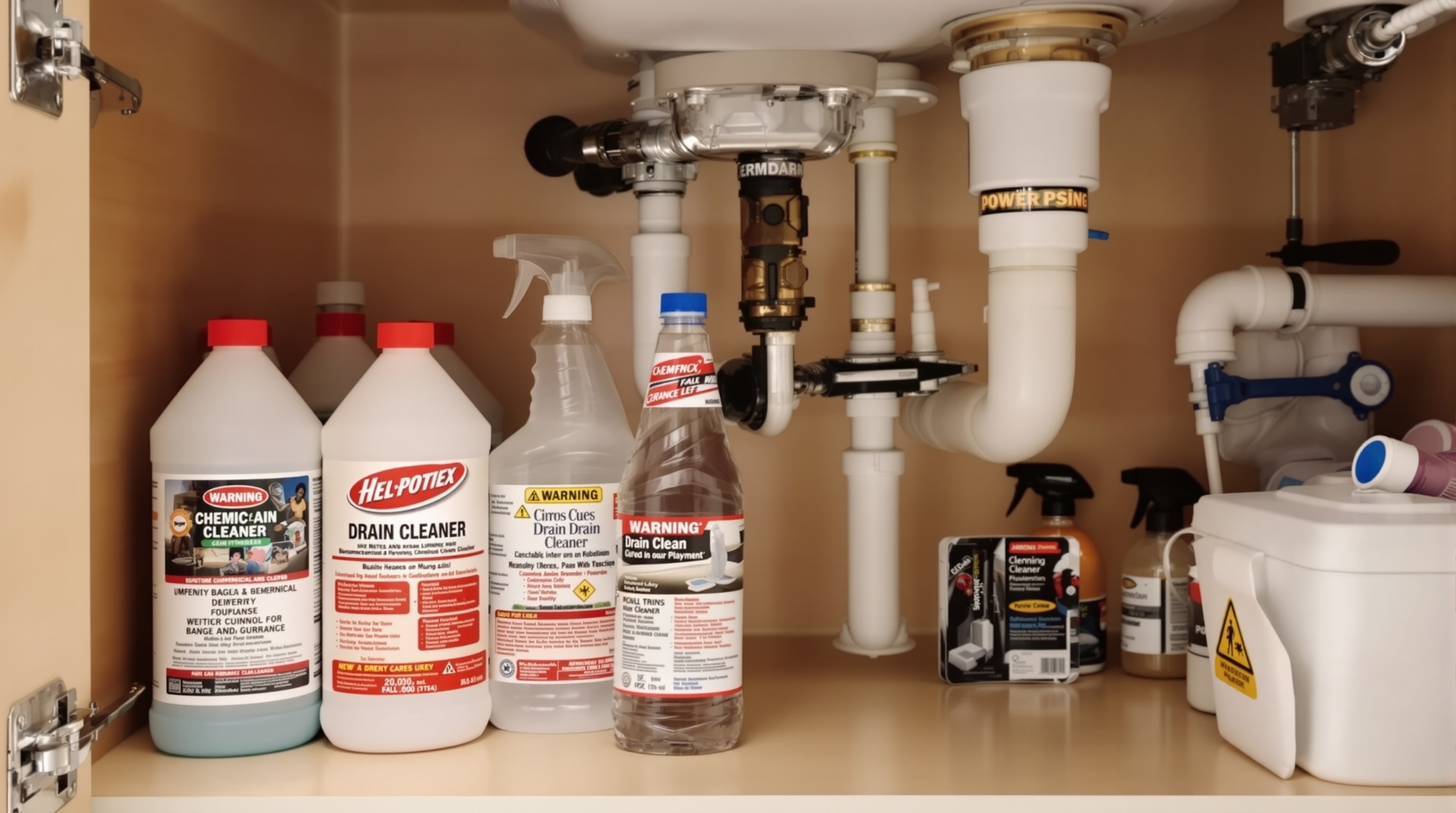
That bottle of Drano under your sink feels like an easy fix. Drain slow? Pour it in, wait 15 minutes, problem solved. Except it's usually not that simple — and over time, chemical drain cleaners can actually make your plumbing situation significantly worse. Here's the honest truth about what those products do to your pipes.
How Chemical Drain Cleaners Work
Chemical drain cleaners work by creating a heat-generating chemical reaction inside your pipe. The active ingredients — usually sodium hydroxide (lye) or sulfuric acid — dissolve organic material like hair and grease. The reaction generates significant heat, which is what breaks down the clog.
The problem is that this same heat and chemical reaction doesn't just affect the clog. It affects everything it touches — including your pipes.
The Damage They Cause
PVC pipes: The heat generated by chemical drain cleaners can soften and warp PVC pipes, especially older ones. Repeated use can cause joints to loosen and pipes to deform over time.
Older metal pipes: Many homes in Bensalem and Bucks County have older galvanized steel or cast iron pipes. Chemical cleaners accelerate corrosion in these pipes, eating away at the metal and shortening their lifespan significantly.
Rubber gaskets and seals: The chemicals degrade rubber components in your plumbing, leading to leaks at joints and connections.
Porcelain fixtures: If the cleaner splashes or sits in a sink or tub, it can etch and damage the porcelain finish.
They Often Don't Fix the Real Problem
Chemical cleaners are reasonably effective at dissolving soft organic clogs — hair, soap scum, food debris. But they do nothing for grease buildup, mineral deposits, tree root intrusion, or structural pipe problems. If your drain is slow because of grease accumulation or a partial root blockage, Drano will give you temporary relief at best.
The clog comes back, you pour more chemicals, the cycle repeats — and your pipes get a little more damaged each time. We see this pattern constantly in homes across Bensalem, Trevose, and Feasterville.
Safer Alternatives That Actually Work
- Use a drain snake or Zip-It tool to physically remove hair clogs
- Pour boiling water down kitchen drains weekly to melt grease buildup
- Use a plunger for toilet and sink clogs before calling a plumber
- Install hair catchers to prevent bathroom drain clogs in the first place
- Call a licensed plumber for a professional drain cleaning — it's safer and more effective
What If You've Already Used Chemical Cleaners?
If you've been using chemical drain cleaners regularly, it's worth having a plumber inspect your pipes — especially if they're older. A camera inspection can show us whether there's any corrosion or damage that needs to be addressed before it becomes a bigger problem.
Going forward, stick to mechanical methods and professional cleaning. Your pipes will last longer, your drains will stay cleaner, and you'll spend less money on repairs over time. We serve Bensalem, Langhorne, Bristol, Trevose, Feasterville, Southampton, Yardley, and all of Bucks County.
Skip the chemicals. Call the professionals.
Call (267) 356-3857 or schedule service online.
Need a Drain or Plumbing Expert in Bensalem?
We're available 24/7 across Bensalem, Langhorne, Bristol, Trevose, Feasterville, Southampton, Yardley, and all of Bucks County.